
By The Personal Injury Team At Harden Crichton, P.C. | Philadelphia Accident And Security Footage Attorneys

In the moments after a serious crash, most people are thinking about their injuries, their vehicle, and how they are going to get home. Almost no one is thinking about the cameras. Yet learning how to get security footage from your accident can be one of the most important things you do for your case, and the window to act is often far shorter than people expect.
Across Philadelphia, video is being recorded almost everywhere. Storefronts, doorbell cameras, traffic poles, license plate readers, and even the buses and trolleys rolling past a scene are all capturing what happens on the road. That video can show exactly how a collision unfolded, who had the light, and who was where. The catch is that most of this footage does not last. Many systems record over themselves within a few days, and once the video is gone, it is gone for good.
If you were hurt in a collision anywhere in the Philadelphia area, the personal injury team at Harden Crichton, P.C. can help you identify the cameras that may have captured your crash and move quickly to preserve that evidence. To speak with the firm about your case, call 215-798-7341 or reach out through the online contact form on this website for a free consultation.
Accident Security Footage In Philadelphia: Why Does Video Evidence Matter So Much To Your Case?
Insurance companies build their decisions around one basic question, which is what actually happened. Witnesses forget details, drivers tell different stories, and a police report may only capture part of the picture. Video does not have those weaknesses. A few seconds of clear footage can settle a dispute that would otherwise come down to one person's word against another's.
Strong video evidence can establish which driver ran a red light, how fast a vehicle was traveling, and whether a hazard was present before you were hurt. It can also capture the moments right after a crash, including how the vehicles came to rest and how injuries appeared at the scene. In many cases, this kind of proof is the difference between a denied claim and a fair recovery.
Footage is especially valuable when the other side tries to shift blame onto you. Pennsylvania follows a comparative fault approach, which means the amount you recover can be reduced if you are found partly responsible. Clear video that shows what really happened helps protect you from an unfair share of the blame and keeps the focus on the driver who caused the harm.
How To Get Security Footage From Your Accident: What Steps Should You Take First?
The first rule of video evidence is that speed matters more than anything else. Because most recordings are overwritten quickly, waiting even a week can mean the footage is already gone. Knowing where to look and how to ask can preserve proof that would otherwise vanish.
When you are able, these early steps can make a real difference:
- Look around the scene: note any nearby stores, homes, gas stations, or parking lots that may have cameras pointed toward the road
- Photograph the cameras: capture the location and angle of any camera you see so it can be identified later
- Ask for names: get the business name and address of any property that may hold footage
- Save your own devices: preserve dashcam files, doorbell clips, and phone videos before they are recorded over
- Write down the time: note the exact date and time of the crash so a request can target the right window
Even a short list of possible camera locations gives your legal team a starting point. From there, the firm can send formal requests and preservation notices to the right parties. Many businesses will not release video to an individual, but they respond very differently to a written legal request from an attorney.
Flock Cameras And License Plate Readers: Can Roadside Surveillance Help Prove Your Accident Claim?
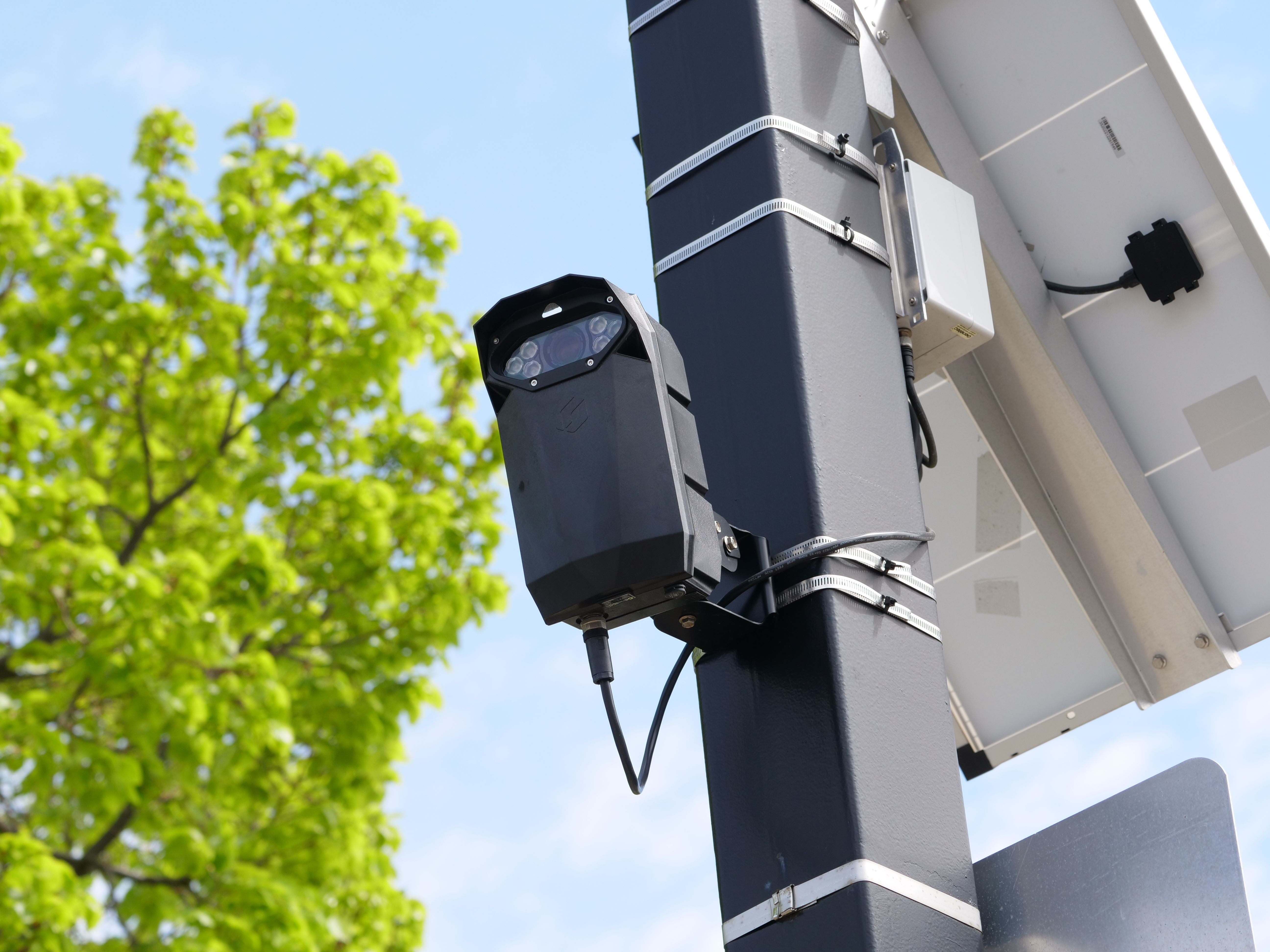
One of the fastest growing sources of roadside video in Pennsylvania is the automated license plate reader, often known by the brand name Flock. These small cameras are mounted on poles along streets and intersections, and they photograph passing vehicles and their plates around the clock. These readers have spread quickly across Pennsylvania, including the Philadelphia region, and by 2026 their rapid growth had prompted Governor Josh Shapiro and state lawmakers to pursue new limits, and even a possible ban, on how the cameras are used and how long their data can be kept.
For an injury claim, these cameras can be useful in ways that surprise people. While they are designed to read plates, the images they capture can help place a specific vehicle at a specific location and time. That can matter a great deal in a hit and run, where identifying the vehicle that fled is often the hardest part of the case.
Access to this data is limited and time sensitive, which is exactly why prompt legal action is important. An attorney can move to identify which systems may hold relevant images and take the proper steps to request or preserve them. Acting early gives you the best chance of using this technology to support your claim rather than losing it to a retention deadline.
Pole Cameras And Philadelphia SafeCam: Who Else Might Be Recording Your Crash?
Beyond license plate readers, Philadelphia is covered by city and police pole cameras mounted at busy intersections and along major corridors. These fixed cameras often capture wide views of traffic, which can be valuable when a crash happens in the middle of an intersection or near a transit stop. Their footage is controlled by public agencies, so obtaining it usually requires a formal and timely request.
The city also runs a program called SafeCam, which is a registry of private security cameras owned by residents and businesses. Property owners voluntarily list their cameras so investigators know where footage may exist after an incident. That same map of private cameras can point toward video that helps prove how your accident happened.
The challenge with all of these sources is that no single office holds every recording. A doorbell camera on a rowhome, a gas station camera near the corner, and a city pole camera above the intersection may each hold a different piece of the story. Pulling those pieces together takes knowledge of who controls each system and how quickly each one must be contacted.
SEPTA Buses And Trolleys As Roving Cameras: How Can Transit Video Support Your Injury Claim?
One of the most overlooked sources of accident footage in Philadelphia is public transit. SEPTA buses and trolleys are essentially moving cameras that travel the same streets as everyone else. SEPTA began rolling out automated enforcement cameras on its buses in 2025 and expanded them to its trolley fleet in 2026, and those cameras have already issued more than 200,000 parking and stopping citations, putting even more recording equipment out on city streets.
Because these vehicles are constantly in motion, a bus that happened to be passing your intersection could hold the clearest view of your crash. Transit video may capture a vehicle running a light, a driver drifting into a bike lane, or a pedestrian being struck in a crosswalk. This is true even when your accident had nothing to do with the bus itself.
Transit agencies retain this footage under their own schedules, and requests generally must follow specific procedures. That makes early action essential, because a routine records cycle can erase useful video before anyone thinks to ask for it. An attorney familiar with these agencies can help identify the right route, vehicle, and time window and pursue the footage before it is lost.
Practical Next Steps After A Crash: How Do You Preserve Footage Before It Disappears?
The days right after an accident are the most important for protecting video evidence. Small actions taken early can preserve proof that would otherwise be impossible to recover later. The goal is simple, which is to find the cameras and stop the clock before anything is erased.
Consider these practical steps as soon as you are safely able:
- Get medical care first: your health and your medical records both matter to your case
- Report the crash: a police report helps document the time, location, and parties involved
- Identify cameras early: list every business, home, pole, or transit vehicle that may have recorded the scene
- Avoid delay: contact a lawyer quickly so preservation requests go out before footage cycles off
- Keep your evidence: save damaged property, clothing, photos, and any video from your own devices
After taking these steps, the most effective move is to let a legal team handle the formal requests. The firm can send preservation letters, contact the correct agencies, and follow up on deadlines while you focus on recovering. That way, nothing critical slips away while you are healing.
Video Evidence And Pennsylvania Injury Claims: What Should You Know About Preserving Proof?
In Pennsylvania injury cases, once a party knows that evidence may be relevant to a claim, there is a legal expectation that the evidence should be preserved rather than destroyed. This principle is why a formal preservation letter carries weight. When a business or agency receives written notice that its footage matters to a potential claim, it is on notice that erasing the video could carry consequences.
An attorney can send these notices to stores, property owners, and public agencies to help stop routine deletion. The firm can also pursue footage through the proper legal channels when a party is unwilling to cooperate. This is often where having knowledgeable counsel makes the biggest difference, because individuals rarely have the tools to compel preservation on their own.
It is important to be realistic about video evidence as well. Not every camera will have a clear view, and not every request will succeed. No firm can promise a particular outcome, but a determined and prompt effort gives your case the strongest possible foundation of proof.
Serving Injured Clients Across Philadelphia And The Surrounding Counties
Harden Crichton, P.C. helps injured people throughout Philadelphia and the nearby communities of Delaware County and Montgomery County, including Upper Darby, Yeadon, Darby, Glenolden, Media, and Chester. Crashes along corridors like I-95, the Schuylkill Expressway, Market Street, and Roosevelt Boulevard are often captured by the very cameras discussed above, from license plate readers to passing transit vehicles.
Because the firm knows the local roads, intersections, and agencies, it can move quickly to find the footage that matters in your case. Fast, local action is often what keeps valuable evidence from disappearing before your claim is even filed.
Frequently Asked Questions About Accident Security Footage
How long do businesses keep security footage after a car accident?
It varies widely, but many systems record over old footage within a few days to a few weeks. That short window is why it is important to request accident security footage as soon as possible after a crash in Philadelphia.
Can I get SEPTA bus or trolley footage of my accident?
Possibly, if a transit vehicle was near the scene at the time. SEPTA retains this footage under its own schedule and specific request procedures, so acting quickly gives you the best chance to preserve it.
Do Flock cameras or pole cameras record car accidents?
License plate readers and city pole cameras are not built to document crashes, but the images they capture can help identify vehicles and place them at a scene. This can be especially helpful in a Philadelphia hit and run case.
What should I do if a store refuses to give me the video?
Many businesses will not release footage to an individual. A lawyer can send a formal preservation request or pursue the video through legal channels, which is often far more effective than asking on your own.
Move Quickly To Protect The Video Evidence In Your Case
Every day that passes after an accident is a day that valuable footage could be erased. From storefront cameras and doorbell video to Flock license plate readers, pole cameras, and SEPTA transit vehicles, Philadelphia is full of evidence that can help prove your case, but only if someone acts before it is gone. The sooner you reach out, the more the firm can do to secure that proof.
If you were injured in a crash anywhere in the Philadelphia region, contact Harden Crichton, P.C. today for a free consultation. Call the firm at 215-798-7341 or use the online contact form on this website, and let the team get to work preserving the footage that could make the difference in your claim.
Disclaimer: This blog is intended for informational purposes only and does not establish an attorney-client relationship. It should not be considered as legal advice. For personalized legal assistance, please consult our team directly.